Showing posts with label First Principles of Instruction. Show all posts

Friday, June 12, 2015

Applications of First Principles of Instruction Based on Workshop Activity

As I mentioned in a previous post, I recently gave a presentation on how to teach like an award-winning instructor. Award-winning instructors tend to apply First Principles of Instruction in their teaching. During this presentation, I asked participants to generate ideas for applying these principles, and below are some of their ideas. There are some good ideas, here! For more detail on these principles, you might review this page. Note that the examples below focus on the 4 phases of instruction but do not focus on the problem-centered principle.

Activation Examples:

  • Brain Writing – idea in center of paper and pass around
  • Free Writing
  • Previous Assignment is ticket to enter class
  • Muddiest point
  • Ask what you know of topic – what have you done before
  • List – group – label
  • Polling
  • Placing a dot near know subjects
  • Personal experience about something in your life as it relates to literature.
  • Apply real world knowledge.
  • Stimulate how subjects relate to their real life.

Demonstration Examples:

  • YouTube clips – example: Super Size me in 7 minutes
  • Polling – phones
  • Jeopardy game template
  • Students and teacher write a lesson plan together
  • Design an activity that demonstrates what is to be learned
  • Graphic organizers to demonstrate what is to be learned
  • Give a concept and then give a real example
  • Give a live demonstration
  • Explain a real world concept
  • Demonstration - uses YouTube

Application Examples:

  • Use a project working on in real life
  • Two -minute papers
  • Quick quiz
  • Have students analyze information
  • Students apply real world concepts
  • Problem solving
  • They put their ideas down on chart. Paper or in a word document and share it on a smart board
  • They use the information when they write their lesson plans

Integration Examples:

  • Field experiences
  • Create own solar cells –  make models
  • Create project plans or case studies
  • Students' application of real information
  • Role-playing exercises
  • Real world situation where students apply information?

Thursday, June 11, 2015

How to Teach Like an Award-winning Instructor

What do highly-recognized instructors do? In this blog post, I will point you to some resources that outline how several excellent, award-wining faculty members at a large university use research-based strategies for effective instruction.


First Principles of Instruction
Initially, I set out to discover how well these teachers utilize known principles of instruction. I found that they were definitely using these strategies, and they also possessed characteristics and traits that really helped facilitate student learning and move them forward in their learning.


I also recently gave a presentation on some of these findings at the Teaching and Learning in Higher Education Conference and have shared my slides below.

Monday, July 1, 2013

Tell, Show, Do, Apply: The Anatomy of Good Instruction

This article was originally posted at elearningindustry.com

There are a lot of opinions about how to design quality instruction. New technologies, theories, and processes are continually created and touted as the next greatest thing for instructional designers. And while these new technologies can be powerful, there are a few key instructional strategies that must be implemented to maximize learning effectiveness. 
 These principles have consistently been shown to increase learning and engagement, but often instructional designers become enamored by the new technologies and fail to implement these strategies effectively. In this post, we will describe these strategies and show how you can use them effectively in your design.
 We can categorize all instructional activities into two basic categories:
  1. Stuff that the Instruction or Instructor does, and
  2. Stuff that the Learner does. Within these categories there are four basic strategies for creating excellent instruction: tell, show, do, and apply.
The Four Basic Strategies for Creating Excellent Instruction
  1. Tell
    The first component of good instruction is the Tell strategy. This is the strategy used to provide the learner with key information related to their learning. Facts, concepts, rules, and procedures can all be conveyed using the Tell strategy. For example, if you were designing instruction to teach customer service representatives how to offer a new product to their existing customers, you would tell them the specific steps they would go through to offer the product and even show a visual outline of the steps.
  2. Show
    The second component of good instruction is the Show strategy. This is the strategy used to demonstrate examples of what you want to teach. In the customer service example, you would show a variety of real examples of an agent offering the product to the learner. You would probably show "non-examples" as well- examples of what not to do when offering the products. These examples will help the learner see how the information you told them is applied.
  3. Do
    After providing a variety of examples, you should provide your learners with the opportunity to Do what you have taught them. In the customer service example, the learners take several calls with actual customers and offer them the product. Trainers and managers listen in on these calls and provide the learners with feedback and guidance. It is important that learners be given plenty of feedback as they apply what they have learned so that they can improve their skills and abilities. As in this example, the is application of the new knowledge should replicate the real-world environment as much as possible to make the learning experience authentic and engaging.
  4. Apply
    The final component is Apply. In this step, learners plan out how they will apply their knowledge in their own environments. In the customer service example, the learners plan out their own personalized scripts for specific situations and set goals for offering and selling products to their clients.
These basic strategies align with several known theories of instruction. For example, they support Merrill's First Principles of Instruction, a well-known theory of instruction that is based on extensive research. Gagne's 9 Events of Instruction also align well with these strategies.

The next time you design a piece of instruction, ask yourself how well you are using these strategies. If you will conscientiously apply them, you will find increased student learning and instructional design effectiveness.

Saturday, June 22, 2013

Article: A Conceptual Framework for Organizing Active Learning Experiences in Biology Instruction

In the world of teaching and learning, many people talk about "active learning." However, this is something that seems to have been poorly defined, in the past. To help clarify what active learning actually is, my colleague Dr. Brian Belland and I recently published an article entitled A conceptual framework for organizing active learning experiences in biology instruction.In this article, we outline what we identify as some of the major themes of active learning, particularly in higher education biology courses. The active learning themes we identified include (1) Problem-solving, (2) Collaboration and Discussion, (3) Animations, and (4) Technology-enhanced Activities.

Active Learning Themes in Biology Instruction.
In the article, we describe these four themes and show how Merrill's First Principles of Instruction can be used as a framework for organizing them. To access the article, click here.


Reference:
Gardner, J., Belland, B., (2011). A conceptual framework for organizing active learning experiences in biology instruction. Journal of Science Education and Technology. Accessed online at http://www.springerlink.com/content/90t3706373j2u190/. DOI: 10.1007/s10956-011-9338-8.

Friday, November 2, 2012

AECT 2012: Summary of my Conference Experiences

#AECT
This is my summary post for the he AECT 2012 International Convention. I had an outstanding experience and in previous posts I blogged some of what I learned throughout the week. If you missed the conference, these links share my experiences.

I feel like I met my goals for the conference - I met some great new people, got oriented to what is going on in the research, and got to interact with old friends. Below is a summarizing list of the blog posts that I wrote about the conference this year. Thanks AECT for a great conference!

Before the Conference
Here are a few posts before the conference and during the drive from Columbus to Louisville.
At the Conference


Thursday, September 20, 2012

What is a "Principle of Instruction?"

In the world of instructional design, we often talk about principles of instruction, (sometimes called principles of instructional design) but it can be difficult to clearly explain what these principles are and how they can be used effectively. In this post I will share some ideas on what they are and how they can and should be used.

Defining Instructional Principles
Let's start by defining each word individually. "Instructional" is related to instruction, which an online dictionary defines as "the practice of instructing... imparting knowledge." This same online dictionary defines a principle as "A rule or law concerning the functioning of natural phenomena or mechanical processes." Merrill (2002) defines a principle as "a relationship that is true under appropriate conditions regardless of program or practice" (p. 43).
If, Then

If-Then
The above definitions can be somewhat confusing, so one easy way to look at principles is to think of them as If-Then statements which describe an underlying law or rule that governs how the natural world functions. In an instructional setting, this means that there are natural laws or rules of learning that can be utilized to facilitate and increase learning. We use these natural laws by employing instructional strategies based on the natural principle. When we apply principles to an instructional setting, we can use the following line of thinking:

If the conditions are X, and you do Y (Y = an instructional strategy that is based on a known instructional principle), Then Z will be more likely occur (Z = the specific outcome).


Here is an example:

If your goal is to have learners learn how to perform a complex cognitive task (X, conditions), and you provide them with real-world "worked" examples of that task being accomplished (Y, instructional strategy based on demonstration principle of instruction), then the learners will be able to solve the complex cognitive task sooner and more effectively than if you didn't provide the examples (Z, outcome).

Instructional principles are probabilistic
It should be noted that these principles are probabilistic in nature, which means that using these principles will make it more likely that student learning will increase. There are many other factors such as student attention and motivation that heavily influence student learning.

Who creates instructional principles?
Instructional principles describe an underlying law or rule that governs how we learn, so technically they are discovered instead of invented. Often these principles are identified through research done at universities. These principles can also be discovered through the practical experience of conscientious instructional designers. No matter where they are discovered, the application of a true principle will always increase student learning if used appropriately.

What are some fundamental principles of instruction?
So, what are some known principles of instruction? Perhaps the most comprehensive compilation of fundamental instructional principles is Merrill's First Principles of Instruction. You can learn more about these principles by accessing the documents below:


Instructional principles are absolutely vital because they help new instructional designers avoid common errors by applying known strategies to their work. Knowing and applying these (and other) principles will inevitably produce more efficient, effective, and engaging learning experiences for our learners.

Monday, April 2, 2012

Article: Applying Merrill’s First Principles of Instruction: Practical Methods Based on a Review of the Literature

Pre-publication draft, reference information at end of post.
To access PDF copies of this and other articles, visit my Academia.edu page.

 Abstract:
Research has shown that when Merrill’s First Principles of Instruction are used as part of an instructional strategy, student learning increases. Several articles describe these principles of Instruction, including specific methods for implementing this theory. However, because teachers and designers often have little time to design instruction, it can be difficult to implement a comprehensive theory like First Principles of Instruction. Therefore, this article provides basic methods for applying First Principles, including several examples from the literature. It also provides a basic template for organizing a module or lesson plan using First Principles of Instruction.
Keywords: instruction; instructional theory; First Principles of Instruction; applying theory; instructional design;

Introduction
The issue of transferring theory into teaching practice is often discussed in the field of education, (De Corte, 2000; Defazio, 2006; Randi & Corno, 2007). For example, a recent study found that most courses in higher education, even those that are award-winning, do not effectively use First Principles of Instruction in their teaching strategy (Cropper et al., 2009). Without using sound theory in the educational practice, instruction can potentially fall short of its power to increase student learning.
Research has shown that the use of First Principles of Instruction in education improves student learning and satisfaction (Frick et al., 2007; Merrill, 2006; Thomson, 2002). However, although several articles describe First Principles of Instruction (Merrill, 2002, 2006), including methods for implementing and evaluating these principles (Merrill, 2009), experience has shown it can be difficult to apply this theory into educational practice. This article therefore describes basic ways for instructional designers and educators to begin using Merrill’s First Principles of Instruction, including a template for designing instruction. Specific methods for applying each principle are also provided.
First Principles of Instruction
A principle describes a relationship that is always true under appropriate conditions, regardless of program or practice (Merrill, 2002). Principles are different from methods, which are “ways to facilitate learning” (Reigeluth, 1999). For methods to effectively bring about student learning, they must be based on principles that describe a true relationship.
Principles are often included in instructional theory, which “offers explicit guidance on how to better help people learn and develop” (Reigeluth, 1999). Merrill emphasizes that instructional design theory should address what actions to take and how and why we should take those particular actions (Merrill & Twitchell, 1994). Instructional theories describe how to teach effectively. They identify methods of instruction, which can be broken into detailed steps, and the situations in which those steps should be taken (Driscoll, 2005, p. 352; Reigeluth, 1999).
In presenting First Principles of Instruction, Merrill (2002, 2006) provides very powerful instructional methods based on five foundational principles of instruction. He writes that learning is promoted when: 
  • Instruction is in the context of real-world problems or tasks and students are engaged in solving a sequence of increasingly complex problems or tasks. 
  • Students activate relevant cognitive structures and recall or acquire a structure for organizing new knowledge, which structure is used for instruction, coaching, and reflection activities. 
  • Students observe a demonstration of skills to be learned that is consistent with the content type, guides students to relate general information to specific instances, and uses media that is relevant to the content and appropriately used. 
  • Students engage in application of new knowledge that is consistent with the type of knowledge being taught, receive intrinsic or corrective feedback, and receive coaching that is gradually withdrawn for each subsequent problem or task. 
  • Students integrate their new knowledge or skill by reflecting on, discussing, or defending the new knowledge or skill, and exploring personal ways to use it and displaying it publicly.
These five principles can be converted into four phases of instruction, occurring in the context of a real-world problem or task. See Figure 1. This four-phase process guides instructional designers and educators to bundle their teaching and learning activities in a way that improves student learning and that makes it easy to incorporate new methods within that process. The process begins with activation of students’ prior learning, followed by demonstration of new knowledge, student application of knowledge, and student integration of knowledge, all based on the real-world problem or task.

Figure 1. Merrill’s First Principles of Instruction.

Several research articles provide significant empirical and anecdotal support for First Principles of Instruction (Frick et al., 2007; Merrill, 2006; Thomson, 2002). Thomson (2002) showed how these principles were used to teach a potentially drab spreadsheet course. By using real-world scenarios and following the four-phase cycle of instruction, students achieved a 30% performance improvement over the traditional instruction, including a 41% improvement in time performance (p.8). In another study, Frick et al. (2007) found strong correlation between the use of Merrill’s First Principles and student satisfaction and perceived and actual performance in the class. In addition, several authors show how these principles have been applied in educational and corporate settings (Collis & Margaryan, 2005; Gardner et al., 2008; Gardner & Jeon, in press; Mendenhall et al., 2006).
While the results of these studies and cases are impressive, it can be difficult to apply this theory. To help transfer these principles from theory into educational practice, this article will provide prescriptions based on a review of several instructional theories and case descriptions.

Applying First Principles of Instruction
This section describes instructional methods and strategies based on First Principles of Instruction. Several questions are asked followed by practical answers for applying First Principles of Instruction. Figure 2 is a worksheet for planning how to use these principles in a lesson or unit.
How can I base my instruction on real-world problems or tasks?
Real-world experience is the bedrock of all learning (Dale, 1996). The goal of the instruction should be to have students solve problems (Jonassen, 1999), so have students do performances that matter in the real world (Gardner, 1999). Make sure the problems are authentic (Nelson, 1999), useful (Dale, 1996), meaningful (Mayer, 1999), and intrinsically motivating to the student (Schank et al., 1999). The challenges should be easy at first (Burton et al., 1984) but be increasingly difficult as you move through the materials (Gardner et al., 2008; Perkins & Unger, 1999; Schwartz et al., 1999). Make sure your problems and tasks safely allow the practice of skills and subskills (Burton et al., 1984) and try to make them physical, tangible activities (Collis & Margaryan, 2005).
How do I activate my students’ prior knowledge? 
  • Have your students relate or recall what they already know about the subject (Gardner et al., 2008; McCarthy, 1996). Try to choose subjects the students will relate to (Schank et. al., 1999) and build on your students’ relevant prior knowledge (Collis & Margaryan, 2005).
  • Allow your students to “look ahead” and preview what they will learn (Schwartz et al., 1999). Let them see the problem(s) to be solved and the subjects they will learn (Mendenhall et al., 2006). Also, show them the process they will go through to solve these problems (Nelson 1999). Try to make the structure of the information and knowledge obvious by using a model to organize instructional materials (Darabi, 2002).
  • Give your students a foundation to build new knowledge on. Give them a good reason for engaging in the problem (Jonassen, 1999). Tell stories, give them statistics, and provide hands-on activities (Gardner, 1999) upon which to build new knowledge. Discuss the fundamentals of the topic or give a simple analogy upon which to build the new knowledge (Mayer, 1999).
How can I effectively demonstrate new knowledge to the students? 
  • Your students will learn a lot by watching you work, so model performance of the task as you teach (Collins et al., 1991). Teach and model the entire task (Gardner et al., 2008; Mendenhall et al., 2006). Give varied examples of the topic (Gardner, 1999), and related cases and information sources (Jonassen, 1999), including multiple expert perspectives (Schank et al., 1999; Schwartz et al., 1999). This will broaden your students’ understanding.
  • Be sure to make the structure of the knowledge clear (Mayer, 1999) by following and referring to the organizing model for the knowledge. Be sure to have students relate new knowledge to old knowledge (McCarthy, 1996) to promote encoding of new knowledge.
  • Encourage your students to ask questions during the demonstration (Gardner et al., 2008) and give them instruction as they request or need it (Nelson, 1999).
  • To broaden student understanding, tell analogies and metaphors (Gardner, 1999). Focus your students’ attention by asking questions (Nelson, 1999) and summarizing your instruction (Mayer, 1999). Make your thinking obvious to the student (Collins et al., 1991).
How do I have students apply this new knowledge effectively? 
  • Have your students use what they have been taught (McCarthy, 1996) and spend significant time on practice (Schank et al., 1999). Your students’ activities should include problem-solving activities and you should have them apply new skills in a realistic setting as soon as possible (Keller, 1987). Students should solve as much of the problem or task as possible at each stage (Mendenhall et al., 2006). Problems and tasks should be done in the actual environment using real workplace situations and resources (Collis & Margaryan, 2005).
  • Help your students be cognitively active (Mayer, 1999) by having them solve problems. You can even encourage them to solve problems as a group (Nelson, 1999). Have them recognize and articulate the elements that are common across the differing problems and tasks you have them solve (Collins et al., 1991).
  • Give your students coaching and feedback (Burton et al., 1984; Collins et al., 1991; Nelson, 1999; Perkins & Unger, 1999). Feedback should occur frequently (Darabi, 2002; Perkins & Unger, 1999). Your feedback may need to be visually demonstrated so that students can see their error (Burton et al., 1984) and should be based on clear criteria (Perkins & Unger, 1999). Help your students use your feedback to bring their performance closer to the level of an expert (Collins et al., 1991) and to plan future performance (Perkins & Unger, 1999). When you praise successful work, be sure to attribute the students’ success to their effort, not luck or ease (Keller, 1987). Provide more guidance initially, reducing it as expertise is developed (Gardner et al., 2008).
How do I encourage students to integrate this new knowledge into their everyday life? 
  • Have your students reflect on what they learn (Collis & Margaryan, 2005; Gardner et al., 2008; Jonassen, 1999; Nelson, 1999; Perkins & Unger, 1999; Schwartz et al., 1999), describing their experiences and challenges in applying what is taught (Darabi, 2002). Have students relate their new knowledge to future goals (Keller, 1987). As well, have students leave tips and ideas for future students (Schwartz et al., 1999).
  • Have your students take part in a culminating performance that includes students and parents outside the class (Perkins & Unger, 1999). Afterwards, show the students a recording of their performance (Jonassen, 1999).
Subject of Lesson or Module:

Principle of Instruction
Your instructional plan

Problem-Centered

What real-world, relevant problem or task will the learner be able to perform when we finish this lesson or unit?


Activation

How will you activate the learner’s prior knowledge about this subject and prepare them to learn?

How will your students preview what they will learn?


Demonstration

How will you show the learner how to perform the real-world problem or task?

What various examples of the problem or task will you give your students?


Application

How will your learner practice solving the problem or task?

How will you give them feedback on their performance?


Integration

How will you encourage your learner to integrate this new knowledge and skill into their life?

How will they reflect on, discuss or debate this new knowledge?


Discussion and Summary
The diverse ways that First Principles of Instruction are used in these theories and cases is refreshing, and one can recognize the abundant theoretical and anecdotal support for First Principles of Instruction in the articles cited. By understanding the purpose of the principle and using it in a way that matches design style and personal preference, instructional designers can apply these principles in natural, meaningful ways.
This article is designed to provide teachers and instructional designers with ideas for creating effective instruction. The goal is to provide a framework for organizing teaching and learning activities in a way that is easy to implement and beneficial to students. Designers are encouraged to use the worksheet provided in Figure 2 to plan how to apply these principles. By doing so, one can expect an increase in student learning and satisfaction.
It is often difficult to transfer theory to practice instructional design. This description of how several theorists and designers use Merrill’s First Principles of Instruction should generate ideas for applying this theory in design practice. As well, the template found it Figure 2 provides structured, basic methods for application.
Merrill has synthesized and distilled First Principles of Instruction through a lifetime of research, practice and synthesis. Using these principles increases the efficiency and effectiveness of instruction. Most importantly, instructional designers and educators who use these principles will increase student learning and satisfaction by engaging them in solving meaningful problems and tasks.


References
Burton, R. R., Brown, J. S., & Fischer, G. (1984). Skiing as a model of instruction. In B. Rogoff and J. Lave (Eds.), Everyday cognition: Its development in social context (pp. 139-150). Cambridge, MA and London , Harvard University Press.
Collins, A., Brown, J. S., & Holum, A. (1991). Cognitive apprenticeship: Making thinking visible. American Educator, 15(3), 6-11.
Collis, B., & Margaryan, A. (2005). Merrill plus: Blending corporate strategy and instructional design. Educational Technology, 45(3), 54-58.
Cropper, M., Bentley, J., & Schroder, K. (2009). How well do high-quality online courses employ Merrill's first principles of instruction? In M. Orey, V. J. McClendon, & R. Branch (Eds.), Educational media and technology yearbook (Vol. 34, pp. 121-140). New York: Springer Publishing Company.
Dale, E. (1996). The "cone of experience." In D. P. Ely & T. Plomp (Eds.), Classic writings on instructional technology (Vol. 1, pp. 169-180). Englewood, CO: Libraries Unlimited.
Darabi, A. (2002). Teaching program evaluation: Using a systems approach. American Journal of Evaluation, 23(2), 219.
De Corte, E. (2000). Marrying theory building and the improvement of school practice: A permanent challenge for instructional psychology. Learning and Instruction, 10(3), 249-266.
Defazio, J. (2006). Theory into practice: A bridge too far? AACE Journal, 14(3), 221-233.
Driscoll, M. P. (2005). Psychology of learning for instruction (3rd ed.). Needham Heights, MA: Pearson Education, Inc.
Frick, T., Chadha, R., Wang, Y., Watson, C., & Green, P. (2007, December 11). College student perceptions of teaching and learning quality. Educational Technology Research and Development. Retrieved June 19, 2009, from http://www.springerlink.com/content/722jm250401j7l77/fulltext.pdf.
Gardner, H. E. (1999). Multiple approaches to understanding. In C. M. Reigeluth (Ed.), Instructional-design theories and models: A new paradigm of instructional theory (Vol. 2, pp. 69-89). Mahwah, NJ: Lawrence Erlbaum Associates, Inc.
Gardner, J., Bentley, J., & Cropper, M. (2008). Evaluating online course quality: Teaching evaluation using first principles of instruction. Midwest Journal of Educational Communication and Technology, 2(2), 1-7.
Gardner, J., & Jeon, T. K. (in press). Creating task-centered instruction for web-based instruction: Obstacles and solutions. Journal of Educational Technology Systems.
Glesne, C. (2006). Becoming qualitative researchers: An introduction (3 ed.). Boston, MA: Pearson Education, Inc..
Jonassen, D. (1999). Designing constructivist learning environments. In C. M. Reigeluth (Ed.), Instructional-design theories and models: A new paradigm of instructional theory (Vol. 2, pp. 215-239). Mahwah, NJ: Lawrence Erlbaum Associates, Inc.
Keller, J. M. (1987). Development and use of the ARCS model of instructional design. Journal of Instructional Development, 10(3), 2-10.
Mayer, R. H. (1999). Designing instruction for constructivist learning. In C. M. Reigeluth (Ed.), Instructional-design theories and models: A new paradigm of instructional theory (Vol. 2, pp. 141-159). Mahwah, NJ: Lawrence Erlbaum Associates, Inc.
McCarthy, B. (1996). About learning. Barrington, IL: Excell, Inc.
Mendenhall, A., Buhanan, C. W., Suhaka, M., Mills, G., Gibson, G. V., & Merrill, M. D. (2006). A task-centered approach to entrepreneurship. TechTrends, 50(4), 84-89.
Merrill, M. D. (2002). First principles of instruction. Educational Technology Research and Development, 50(3), 43-59.
Merrill, M. D. (2006). First principles of instruction: A synthesis. In R. A. Reiser & J. V. Dempsey (Eds.), Trends and issues in instructional design and technology, 2nd Edition (Vol. 2). Upper Saddle River, NJ: Merrill/Prentice-Hall, Inc.
Merrill, M. D. (2009). Finding e3 (effective, efficient, and engaging) instruction. Educational Technology, 49(3), 15-26.
Merrill, M. D. & Twitchell, D. (1994). Instructional design theory. Englewood Cliffs, NJ: Educational Technology Publications.
Nelson, L. M. (1999). Collaborative problem solving. In C. M. Reigeluth (Ed.), Instructional-design theories and models: A new paradigm of instructional theory (Vol. 2, pp. 241-267). Mahwah, NJ: Lawrence Erlbaum Associates, Inc.
Perkins, D. N., & Unger, C. (1999). Teaching and learning for understanding. In C. M. Reigeluth (Ed.), Instructional-design theories and models: A new paradigm of instructional theory (Vol. 2, pp. 91-114). Mahwah, NJ: Lawrence Erlbaum Associates, Inc.
Randi, J., & Corno, L. (2007 ). Theory into practice: A matter of transfer. Theory into Practice, 46(4), 334-342.
Reigeluth, C. M. (1999). What is instructional-design theory and how is it changing? In C. M. Reigeluth (Ed.), Instructional-design theories and models: A new paradigm of instructional theory (Vol. 2, pp. 5-29). Mahwah, NJ: Lawrence Erlbaum Associates, Inc.
Schank, R. C., Berman, T. R., & Macpherson, K. A. (1999). Learning by doing. In C. M. Reigeluth (Ed.), Instructional-design theories and models: A new paradigm of instructional theory (Vol. 2, pp. 169-181). Mahwah, NJ: Lawrence Erlbaum Associates, Inc.
Schwartz, D. L., Lin, X., Brophy, S., & Bransford, J. D. (1999). Toward the development of flexibly adaptive instructional designs. In C. M. Reigeluth (Ed.), Instructional-design theories and models: A new paradigm of instructional theory (Vol. 2, pp. 183-213). Mahwah, NJ: Lawrence Erlbaum Associates, Inc.
Thomson. (2002). Thomson job impact study: The next generation of learning [electronic version]. Retrieved June 13, 2009 from http://www.delmarlearning.com/resources/job_impact_study_whitepaper.pdf.


This is a pre-publication draft of an article published in Educational Technology Magazine in 2010. Please feel free to refer to and use these materials, just be sure to use the reference below when citing the publication:

 Gardner, J. (2010). Applying Merrill’s First Principles of Instruction: Practical Methods Based on a Review of the Literature. Educational Technology Magazine. 50(2), pp. 20-25.

Tuesday, February 28, 2012

EdTech Dojo Podcast: 5 Most Fundamental Strategies for Helping Students Learn

I was recently interviewed by my brother on the EdTech Dojo, a site that he and I have been developing. He interviewed me on the Merrill's First Principles of Instruction. (In a previous post, I called these the 5 Most Fundamental Strategies for Helping Students Learn).

Click here to listen to the podcast.

Friday, February 3, 2012

ADDIE Process - the Design Phase

This post is part 2 in a series on the ADDIE Process of Instructional Design.

Design 

After performing an effective analysis, it is important to design your unit of instruction. This means planning out how you will help your students (1) acquire the knowledge and skills you have identified in your analysis, (2) apply that knowledge in meaningful ways, and (3) receive feedback and guidance on their learning. In the design phase, you build on the analysis you have performed. It will guide your thinking and planning.

 There are several steps that can be followed in the design phase. These include:
  1. Analyze the subject matter -You need to have a thorough grasp of the content that the student will be required to understand and use. This analysis usually means breaking the content down into appropriate chunks of information, identifying how these chunks should be taught based on what kind of content they are- knowledge, skills, attitude, real-world task, etc.
  2. Plan out instructional activities -Based on your analysis, you will need to plan out specifically how you will help your students to reach the goals and objectives you devised in your analysis. This includes creating all activities that will help your students acquire the knowledge they need, and practice applying it in meaningful ways. For help on this, see the section Evidence-based practice below.
  3. Storyboard instructional activities -An important step in designing your instruction is storyboarding. This means laying out the sequence of the instructional activities. This can be done in a Word document, in a powerpoint document, on a whiteboard, or on a wall. Some people storyboard in the actual medium they will be developing in, like a Learning Management System. Whatever you do, the point is to plan out a logical sequence of learning activities for the learner.
Evidence-based Practice

As you design your instruction, be sure to use evidence-based practice- in other words, use what works. But what works? What guidance does research and experience give? There are a few fundamental principles of instruction that should be used when teaching knowledge and skills. I have discussed these generally in a previous post on Merrill's First Principles of Instruction. In addition, Gagne's 9 Events of Instruction have empirical evidence supporting their use and are easily implemented.

It is easy to get caught up in a fad or do what seems creative of flashy. But these things can be distracting to students and can actually detract from the effective design of instruction. An example of a distracting but common theory of how people learn is Learning Styles, which I write about here. Learning styles sound credible, but there is actually little or no evidence that adapting instruction to learning styles is actually effective.

I recommend watching this video, which gives a nice overview of the design phase:


Click here for next phase: Development

Saturday, January 21, 2012

The "Learning Styles" Fallacy

As I have taught my graduate students over the past few semesters, it is surprising how many bring up learning styles as a valid frame of reference for a trainer or an instructional designer. A learning styles approach assumes that different people learn more effectively in different ways; for example, people view themselves as "visual learners" or as "kinesthetic learners."

The Fallacy
While this theory seems to make some sense, there is actually little or no empirical evidence that learning styles are a legitimate way to view learners when designing instruction. This has been reported on in some news sources, (for example here or here), which are based on this research study. The researchers in this study conclude that there is currently no evidence supporting the use of learning styles when creating training and designing instruction.

What to do?
So, if learning styles don't give a good foundation for creating instruction or training, what should we consider? This is an important question and there is an answer: To have the greatest chance of designing and delivering effective instruction, trainers and instructional designers need to base their instruction on research-based principles and instructional theories. (I've described how good instructional designers use these and other "tools" in a previous post entitled What is Instructional Design? part 2).

Here is a very short list of instructional theories and principles that a trainer or instructional designer can refer to when considering how to design and develop high quality training and instruction:
  1. Gagne's 9 Events of Instruction. These best practices are based on decades of research. They provide specific steps to take when delivering instruction to a learner.
  2. Merrill's First Principles of Instruction. A more current theory of instruction, these principles prescribe effective, research-based methods for teaching complex skills and knowledge. I describe these principles in more detail in a previous post entitled Merrill's First Principles of Instruction.
  3. Principles of e-learning.  Clark and Mayer (2011) summarize these principles extremely well. The share how to create online training and instruction that adheres to best practices based on the evidence.
There are many, many more resources out there, but these provide a basic foundation for implementing instruction that is based on evidence instead of on unfounded ideas.

What Would You Add?
What else would you add to this list? What other research-based practices are available to help budding trainers and instructional designers create effective learning experiences for their learners? Do you agree that learning styles should be eliminated from our vocabulary as professionals and scholars?

Friday, December 23, 2011

The 5 Most Fundamental Strategies for Helping Your Students Learn

What do good teachers do? What strategies are most effective at helping students learn? This has been the subject of thousands of studies over many decades, and it can be hard to really focus in on what teaching strategies are most effective.

One instructional theory that has had a lot of influence on my own work as an instructional designer and a scholar is Merrill's First Principles of Instruction (2002, 2007, 2009). After spending many years researching and discovering effective teaching strategies, Merrill set out to identify the most fundamental principles of instruction. He reviewed many theories and based on this review, he identified what he calls the 5 most fundamental principles of instruction. When you apply these first principles in your teaching and instructional design, you will engage students in activities that will help them learn more. Here are the 5 principles:
  1. Problem or Task-Centered - Students learn more when they see real-world examples and solve real-world problems or tasks.
  2. Activation - Students learn more when they actively consider what they already know about a topic and relate what they learn to what they already know.
  3. Demonstration - Students learn more when the learn relevant knowledge and skills in the context of a real-world task or problem.
  4. Application - Students learn more when they apply what they have learned in a real-world context and receive feedback and guidance on how their performance.
  5. Integration - Students learn more when they are directed reflect on, discuss, debate, present on, or plan how to use new knowledge and skills.
Instructional Design using Merrill's First Principles of Instruction
First Principles of Instruction (Merrill, 2002).

Personal Experience with First Principles

I've realized that the university courses and teachers that have had the greatest impact on me have used most or all of these principles. For example:
  • My public speaking teacher, Karla Bassett, used these principles when she taught us how to speak. She provided us with a structure for giving speeches (activation). She showed many videos and personally demonstrated the principles and skills of public speaking (task-centered, demonstration) and also had each student perform multiple speeches (application) and gave us feedback on our speeches. This task-centered approach gave me a deep interest in communication and speaking and I went on to earn a bachelor's degree in communication.
  • My Spanish teacher, Carolina Bond, used these principles in class by speaking Spanish throughout the class (task-centered, demonstration, application) and by having us build vocabulary and use sentence structures in real-world scenarios (application). These courses prepared me to later speak Spanish as an English teacher in Guatemala. 
  • Later as a graduate student, my Qualitative Methods instructor Dr. Sherry Marx shared many real-world examples (task-centered, demonstration) of  how she and others had conducted research and directed me and my peers to conduct multiple full-scale studies on our own (application). This task-centered approach to learning gave me an incredible learning experience and I was able to later publish the results of that research.
For more detailed examples of how First Principles of Instruction have been used in educational settings, and how to use these principles, see my recent published articles:

These are just a few examples of how these principles can be used. I believe that if you reflect on the most meaningful formal learning experiences you had as a student, you would find that the instructor used some or all of these principles effectively .

Do You Agree?

So, the question is, do you agree that these truly are the First Principles of Instruction? Or are there other principles that are more foundational than these? Are there other principles that enhance learning more than these? What do you think?

References

Merrill, M. D. (2002). First principles of instruction. Educational Technology Research and Development, 50(3), 43-59. (Click for copy from mdavidmerrill.com)
Merrill, M. D. (2007). First principles of instruction: a synthesis. In R. A. Reiser & J. V. Dempsey (Eds.), Trends and Issues in Instructional Design and Technology, 2nd Edition (Vol. 2, pp. 62-71). Upper Saddle River, NJ: Merrill/Prentice Hall. (Click for copy from mdavidmerrill.com) 
Merrill, M. D. (2009). First Principles of Instruction. In C. M. Reigeluth & A. Carr (Eds.), Instructional Design Theories and Models: Building a Common Knowledge Base (Vol. III). New York: Routledge Publishers. (Click for copy from mdavidmerrill.com)

Thursday, December 1, 2011

What is Instructional Design? part 1

What is instructional design? A friend and colleague of mine, Rob Barton, asked (and answered) this question in a fairly recent blog post. His thoughts are interesting and have made me think of my own response to that question- what is instructional design? Here are my thoughts (which are fairly similar what Rob wrote).

What is Instructional Design?

This is an important question, and sometimes I have a hard time answering it. (This is probably because I get geeked out and start talking about all the "academic" details of the field and practice). It is easiest to describe it through what an instructional designer does. An instructional designer, at the most basic level is a person who creates materials that help people learn.

For the past several years, I have designed instruction for college professors. I help them organize and create course materials and assignments that will help the students learn what is being taught. I do my best to use strategies that are based on what works according to the research. Instructional designers work in many different settings, including public school (K-12), colleges and universities, corporations, and in the military. Most of my experience as an instructional designer has been in higher education.

So, here is where my thinking gets a little more geeky. Below is my more lengthy (and academic) description of what an instructional design is and what instructional designers do.

A More Detailed Explanation

First, instruction (as it relates to instructional design) is an imparted unit of knowledge. Instruction is given with the intent that the one receiving it will acquire or learn that knowledge. (I use the term knowledge broadly to include skill, information, attitude, etc.)

Second, design (as it relates to instructional design) is the deliberate planning and creation of instructional materials.

So, instructional design is the deliberate planning and creation of materials used to impart knowledge to learner.

The Tools of Instructional Designers

As instructional designers plan and create instructional materials, they use several tools and technologies to accomplish their design goals. In my opinion and experience, these include the following major types:
  • Instructional Theory, which is a set of prescriptions describing what the instruction should be like when it is finished. Instructional theory "offers explicit guidance on how to better help people learn and develop" (Reigeluth, 1999). There are many instructional theories, and the most useful and beneficial are those which are based on sound learning theory,  peer-reviewed research, and reflective practice. An example of an instructional theory is Merrill's First Principles of Instruction (Merrill, 2002, 2007, 2009), which I am partial to and have written about (see my publications page). 
  • Instructional Design Processes, which provide guidance on specific steps or phases to follow to help ensure that the instruction is of high quality. Examples include the ADDIE Model and the Dick & Carey Model (Dick, Carey, & Carey, 2006). Both of these are briefly described in Wikipedia's article here.
  • Instructional Technologies and Tools,  which are physical objects* used to create, manipulate and represent the knowledge that is being taught or imparted. These technologies can be used by the instructional designer to create the instruction, by the learner to gain and expand knowledge, or by both. Examples include a Learning Management System such as Blackboard or Articulate, or classic teaching and learning tools such as a pen and a piece of paper.
The Three Tools of the Instructional Designer
The three Types of Instructional Design Tools.

Instructional designers use these tools as they design instruction. Of course, instructional design does not occur in a vacuum, and designers must be aware of and adapt to the context in which they design. This is actually very complex and I will attempt to treat this in a later post. I have written about this idea elsewhere (Gardner, 2011).

In my next post What is Instructional Design? part 2, I will expand on what I have written here and also share a video that explains what instructional designers do.

What Do You Think?

I am interested to read your thoughts. As a whole, instructional designers seem to have a hard time defining what they do and how we do it. Perhaps this is because every design context is different and the way design occurs is therefore different, but are there fundamental similarities? Do you agree with my assertions here?

* Note: I state here that instructional technologies are physical objects. One might remind me that a design process or a theory is also a technology or a tool, but I make the distinction between physical tools and abstract tools. An abstract tool can be represented physically. For example, an instructional design workbook (physical) might guide an instructional designer through the ADDIE process (abstract). Abstract objects can therefore both internal to the designer (something they know, perceive, and conceptualize) and external as a physical representation of that tool or technology.

References

Dick, W. O., Carey, L., & Carey, J. O. (2005). The systematic design of instruction (6 ed.): Pearson/Allyn &; Bacon.

Gardner, J., (2011). How Award-winning Professors in Higher Education Use Merrill’s First Principles of Instruction. International Journal of Instructional Technology and Distance Learning, 8(5), p. 3-16).

Merrill, M. D. (2002). First principles of instruction. Educational Technology Research and Development, 50(3), 43-59.

 Merrill, M. D. (2007). First principles of instruction: a synthesis. In R. A. Reiser & J. V. Dempsey (Eds.), Trends and Issues in Instructional Design and Technology, 2nd Edition (Vol. 2, pp. 62-71). Upper Saddle River, NJ: Merrill/Prentice Hall.

Merrill, M. D. (2009). First Principles of Instruction. In C. M. Reigeluth & A. Carr (Eds.), Instructional Design Theories and Models: Building a Common Knowledge Base (Vol. III). New York: Routledge Publishers.

Reigeluth, C.M. (1999). What is instructional design theory? In C.M. Reigeluth (Ed.) Instructional design theories and models: A new paradigm of instructional theory (Vol. 2, pp. 5-29). Manwah, NJ: Lawrence Erlbaum Associates.

Tuesday, November 8, 2011

Article: How Award-winning Professors in Higher Education Use Merrill’s First Principles of Instruction

Pre-publication draft, reference information at end of post.
To access PDF copies of this and other articles, visit my Academia.edu page.

Note: All names of schools and people are pseudonyms.
Abstract
There is increasing evidence that using Merrill’s First Principles of Instruction as part of an instructional strategy increases learning. However, these principles are written in general terms, and little is written about how these principles function in the real world. Knowing how these principles are currently used in the real-world would extend our understanding of the principles and provide insight into how they can be implemented. Therefore, a study was conducted to determine how four award-winning instructors in higher education used First Principles of Instruction in their teaching. The instructors’ use of these principles is described and analyzed. In addition to these principles, several additional strategies for providing effective instruction emerged during the study, including instructor enthusiasm, compassion, organization, and expertise. Specific methods for using these principles in higher education are explored, and several important questions regarding the use of First Principles of Instruction are posed, particularly related to the use of real-world problems in instruction. Suggestions for future research and practice are also provided.
Gardner, J., (2011). How Award-winning Professors in Higher Education Use Merrill’s First Principles of Instruction. International Journal of Instructional Technology and Distance Learning, 8(5), p. 3-16).
Introduction
One current theory of instruction is Merrill’s First Principles of Instruction (Merrill, 2002, 2007, 2008), which proposes five foundational principles of instruction which, when used, are proposed to increase student learning. Merrill states the following principles: (1) Task/Problem-Centered – learning is increased when instruction is centered on real-world problems or tasks; (2) Activation – learning increases when learners recall or demonstrate relevant prior learning and recall or are given a way to organize what they will learn; (3) Demonstration – learning increases when learners observe a demonstration in which a similar problem is solved and/or a similar task is performed; (4) Application – learning increases when learners apply what they have learned by solving real-world problems and/or performing real-world tasks; (5) Integration – learning increases when students reflect on, discuss, debate, or give a presentation on what they have learned (Merrill 2002; 2006). These principles can be converted into a cycle of instructional activities, centered on real-world tasks and problems. See Figure 1.
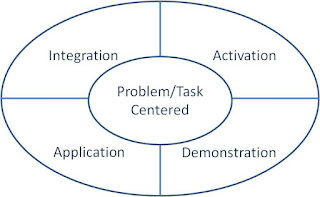
Figure 1. Instruction can follow a cycle of instruction centered on real-world tasks beginning with activation and continuing through integration.

There is some evidence that these principles increase learning. Thomson (2002) reported a study in which an online Excel spreadsheet course using First Principles was compared with a traditional online course teaching Excel. Basing the course on real-world tasks and using the four-phase cycle of instruction caused a 30% student improvement in performance accuracy using Excel, including a 41% improvement in the time taken to complete tasks (p.8). In a separate study, Frick (2009) discovered a significant correlation between student satisfaction with a course and the reported use of First Principles of Instruction. There is also evidence that these principles are supported by various instructional models and theories (Gardner, 2010; Merrill, 2002; Merrill, Barclay, & van Schaak, 2008). In addition, there is some empirical support for the individual principles (Merrill, 2006; Merrill, Barclay, & van Schaak, 2008). Additionally, several authors have described successful instruction that uses First Principles (Collis and Margaryan 2005; Mendenhall, et al., 2006; Gardner, et al. 2008). Growing empirical, theoretical, and anecdotal support for First Principles of Instruction warrants further investigation and understanding of how these principles operate in a live instructional setting. 

Study Purpose
Principles are intentionally general and to be used effectively must be tailored to specific contexts, problems and situations (Merrill, 2002; Keller, 2008).Because these principles are written in a general form, it can be difficult to interpret and apply these principles to a real-world setting, and guidance on how to implement these principles is needed (Merrill, 2007). Because effective practice can contribute to and help build theory (http://www.aect.org/), it would be beneficial to study how these principles are used successfully by expert teachers. To date there have been no studies that report how award-winning instructors are using Merrill’s First Principles of Instruction in higher education. Therefore, I studied four award-winning professors in higher education with the goal of discovering methods of instruction that adhere to Merrill’s First Principles of Instruction. The guiding question in the design of the study is, “How do effective, award-winning instructors at a large western university use Merrill’s First Principles of Instruction?”

Method
The study took place at a large western university. To ensure that I studied quality instruction, I selected four professors who had been recognized in previous years as the teachers of the year for the entire university. This recognition is very prestigious and is awarded to one of several hundred instructors for outstanding teaching at the university. Awardees are experienced instructors who were considered and selected based on the recommendations of their peers and the feedback of past students. It was assumed, and later confirmed, that the instructors selected for this study effectively apply some or all of Merrill’s First Principles of Instruction. Potential participants were identified from an online list showing past award winners on the university website. They were contacted twice via email and were asked to participate in the study. Of the winners for the past ten years at university, six replied to my emails. And of the six that replied, four agreed to participate in the study and were included as participants in this study.

The Researcher
An important aspect of my relationship to these instructors was my employment as an instructional designer in the university’s center for teaching. In this role, I supported several departments at the university in developing and managing course content in Blackboard Vista, the university’s Course Management System. Because I worked directly with professors at the university, I was particularly well-positioned to gather relevant knowledge for this study.
The purpose of this study was to find out how instructors use First Principles of Instruction in higher education. To gain a rich understanding of the instructors’ teaching strategies, I followed the advice of Glesne (1992) and gathered data from several sources: an interview with each instructor (which was recorded and later transcribed), an observation of the instructor in a teaching setting, and documents provided by the professor relating to their teaching philosophy and strategy. These documents included course syllabi, student evaluation feedback data, assignment descriptions, peer evaluations, and emails from students. These multiple sources provided triangulation of data for this study.
Data were analyzed using thematic analysis (Glesne, 1992; Gall, Gall & Borg, 2007). I searched for any reference in the sources that referred to the use of any of the five First Principles of Instruction. In addition to themes directly related to First Principles, several other themes and patterns emerged from the data. Appendix 1 demonstrates the codes and associated themes that emerged during the study. All documents and transcripts were coded according to these themes and were then analyzed and are described in the following section.

Results: Instructors’ Use of First Principles of Instruction
This section describes the findings of the data, which were analyzed using thematic analysis and grouped into categories defined by First Principles and other themes that emerged during the study. The instructors included in this study are described to provide context for who was studied. Instructor use of Merrill’s First Principles of Instruction is described. Themes that emerged during the analysis but were not specific to First Principles of Instruction are also described. The findings are presented as a description of how the instructors used each principle in the courses. The additional themes are then presented, including examples from each instructor. Tallies recording how often each principle was observed are presented in Appendix 2, which also indicates the source of the observation.

Study Participants
Dr. Linda Kelley
Dr. Linda Kelley is a professor in the department of Family, Consumer, and Human Development. She began her career as a kindergarten teacher and has earned graduate degrees in child development. She has worked with small children throughout her career and chose to take a position as a professor and director of a student-teaching preschool lab because her “three favorite populations are parents, little children and college students.”
In student evaluations, students described Dr. Kelley as “very approachable and friendly,” and “enthusiastic.” In the class I observed, she arranged the classroom in a circle and spent time chatting and laughing with the students before and after the class. Students described the class as “a comfortable conversation where we could discuss anything.” The nature of her relationship with students appears to be comfortable and enjoyable to Dr. Kelley and to her students.
Dr. Bretton Wellington
Dr. Bretton Wellington is a professor of Marketing in the School of Business at the university. He began his studies at San Jose State where he earned a bachelor’s degree in Marketing. After earning and MBA from Santa Clara University and a Ph. D. in Marketing from Arizona State University, he taught briefly in Arizona and afterward took a position at the university where he has taught for nearly 17 years. Most of his research focuses on the market diffusion of renewable energy and clean technologies. Dr. Wellington has a confident and an engaging personality, and peers in the School of Business who had observed his teaching described him as “”terrific in engaging students,” “very animated and energetic,” and “enthusiastic.” My observation of his teaching style confirms this description, and I found myself drawn into his presentation through his use of dynamic voice inflections and witty humor.
Suzan Harrison
Suzan Harrison is an instructor in the Department of Nutrition and Food Science at the university. She was born and raised in the community surrounding the university and earned a bachelor’s and a master’s degree from the program at the university. Before taking a position as professor, she worked in many positions in the field of nutrition, including an outpatient dietician at the local hospital, a dietary manager for patients in a nursing home, and even worked with diabetics and clients with eating disorders. After working in a research position at the university, she transitioned from researcher to professor and now manages and organizes all of the undergraduate introductory nutrition courses at the university. Harrison is a pleasure to talk to and many of her students describe her as “very professional,” “extremely knowledgeable,” and “fun to listen to.”
Dr. Pradeep Sumbramony

Dr. Pradeep Sumbramony is a professor in the Department of Economics in the School of Business at the university. He began his education at Calcutta University where he earned a bachelor’s degree in Economics. He later earned a PhD in Economics from Chicago University and afterward came to the university as professor. He has taught at the university for over 33 years and has received many awards for excellence in teaching and mentorship. Students described Dr. Sumbramony as “enthusiastic,” “very entertaining,” and that he showed “genuine care for his students.” Dr. Sumbramony had compassion for his students and worked to provide individual guidance and attention to each of his students. One student wrote, “I admire and appreciate (his) effort and love for teaching me.”

Instructor Use of First Principles of Instruction
The instructors’ use of First Principles of Instruction is described below. Results are presented according to the themes associated with each principle, and discussion of the findings follows the presentation of the findings.

Problem/Task-Centered
Dr. Kelley (Child Development) 
  • In one class, students plan out and executing lesson plans in the university pre-school lab.
  • In another class, students do home visits to the families of their students, attend parent meetings and conferences and write reports on the meetings. 
  • Students also work in small groups to respond to real world scenarios they might encounter in their work as pre-school teachers.
Dr. Wellington (Marketing) 
  • In one class, students assume the role of consultants for a real-world companies and perform a marketing audit. 
Suzan Harrison (Nutrition and Health) 
  • Harrison shared real-world, personal examples of the nutrition and development phenomena that she was teaching in lectures. 
  • Harrison embodied a personal example of excellent fitness and nutrition, as noted by her students. 
  • In one class, students used what they had learned by analyzing the contents of infant formula to see how well it matched important research knowledge. 
Dr. Sumbramony (Economics) 
  • Students solved economics problems using complex equations.
Activation
Dr. Wellington (Marketing)
  • When lecturing, he created an itinerary on the board that organized the class.
  • Referred to and built on the knowledge obtained in previous prerequisite courses.
Suzan Harrison (Nutrition and Health)
  • When beginning a lecture, she reviewed what was discussed in the previous class prior to lecturing on new content.
  • She then previewed the key points of the day’s lecture, providing an organizing structure for the content to be learned.
Dr. Sumbramony (Economics)
  • At beginning of the class period he asked questions to the students regarding more fundamental principles of economics, slowly progressing to questions about more abstract, complex principles, and finally moved into the content of the current class.
Demonstration
Dr. Kelley (Child Development)
  • Students learned from other students by observing and evaluating them as they planned out and executed lesson plans in the pre-school lab.
  • Students listened to how other students responded to real world scenarios provided by Dr. Kelley, and also listened to Dr. Kelley’s feedback on their responses.
Dr. Wellington (Marketing)
  • Students were given access to several high quality marketing audits performed by students in previous semesters.
  • Dr. Wellington provided many relevant examples from the popular media that illustrate the marketing audit steps to be applied by the students.
Suzan Harrison (Nutrition and Health) 
  • Shared personal examples from her life of the nutrition phenomena and human development concepts presented in the lecture.
  • Provided a personal example of excellent fitness and nutrition to her students.
Dr. Sumbramony (Economics)
  • Showed and worked through an example of how to use an equation to solve an economics problem on the chalkboard.
Application
Dr. Kelley (Child Development)
  • Students planned out and executed lesson plans at the pre-school lab.
  • Students responded to real world scenarios provided by Dr. Kelley.
Dr. Wellington (Marketing) 
  • Students performed a marketing audit, including several specific audit-specific activities.
Suzan Harrison (Nutrition and Health) 
  • Students went to the grocery store and analyzed the contents of infant formula to see how it matched what was discussed in class. 
  • Students tracked their own nutritional intake and compared it with what they had learned in class.
Dr. Sumbramony (Economics) 
  • Students used a complex equation solved an economic problem in class and then used the equation to solve a similar problem on their own out of class. 
Integration
Dr. Kelley (Child Development)
  • Dr. Kelley facilitated an in-class discussion with students on their experiences in the lab in which students shared insights with one another.
Dr. Wellington (Marketing)
  • Facilitated interactive class discussions by posing engaging and sometimes off-beat questions to help students to expand their knowledge of the subject.
  • Described to students how the skills they are developing will be useful in the future.
Suzan Harrison (Nutrition and Health)
  • Constantly asked students, “What does this mean to you?”
Dr. Sumbramony (Economics)
  • On several occasions asked students, “Why is this important?”
Cycle of Instruction
Dr. Kelley (Child Development)
  • Student groups responded to real-world scenarios provided by Dr. Kelley in class. Other students learned from those sharing their responses while the sharing group applied their knowledge to the scenario. This was repeated by several groups on several occasions. Dr. Kelley facilitated the discussion by asking questions and also provided feedback and insights to each student group and to the rest of the class on how to improve responses and expand their knowledge related to the scenario.
Dr. Wellington (Marketing)
  • When teaching how to do each of the several specific market analysis tasks, Wellington provided students with multiple examples of the market analysis task, including examples from previous students and examples from the popular media. Students then performed the market analysis task and were later given feedback from Dr. Wellington on how to improve their analysis.
Suzan Harrison (Nutrition and Health)
  • In one class, Harrison directed students to read a nutritional case as a group and were given a worksheet to guide them through the process of applying their knowledge to solve nutritional problems. They then integrated their knowledge by presenting their solution to other groups. Students also learned from each other in the sharing process. This cycle was repeated several times.
Dr. Sumbramony (Economics)
  • When teaching how to solve a difficult economics-related problem, Dr. Sumbramony first worked through the problem using a complex equation on the chalkboard. He then presented another similar problem and had students use the equation to solve a portion of the problem. He then gave them another problem to solve on their own for outside of class.
Additional Themes
In addition to the instructors’ use of Merrill’s First Principles of Instruction, several themes emerged as I analyzed the data for this study. This section briefly describe each of these themes.
Enthusiasm
The first theme that emerged was enthusiasm. For example, Dr. Kelley describes herself as enthusiastic about child development, and in course evaluations, students described Dr. Kelley as “enthusiastic and very effective,” and that Dr. Kelley had “enthusiasm and love of the subjects we studied.” Perhaps this is why one student wrote, “I always look forward to class.” I personally found Dr. Kelley to be very engaging and enthusiastic as I interviewed her and observed her class.
Dr. Wellington also exhibited enthusiasm as part of his teaching, and his peers describe him as engaging, energetic and enthusiastic. My observation confirms the presence of enthusiasm in his presentation and communication style, and I thoroughly enjoyed my interview with him. This enthusiasm is related to what Dr. Wellington calls his “stage presence,” which he attributes to his experience as an opera performer during his time as a student.
Dr. Sumbramony also had high levels of enthusiasm, and in my interview, I was impressed with his ability to speak with energy and passion. Students also noted this energy, describing him as “energetic,” “very passionate,” and that his “activity and enthusiasm are astounding.”
Knowledgeable
In addition to enthusiasm, students noted that an instructor’s knowledge and expertise were important to effective instruction. For example, one student wrote that Dr. Kelley “had the experience and examples to back up what she was teaching.” Others wrote that she “really knew the subject matter” and was “well prepared” for class. This perceived knowledge of child development gave her teaching credibility in the eyes of the students. This theme was also found in Suzan Harrison, whose students described her as “very knowledgeable in the subject,” and that she “really knows her stuff!”
Organization
Instructor organization was also noted as key to effective teaching. For example, Dr. Wellington mentioned, “I like a lot of structure,” and his course syllabus reflects this structure and appears to be very clear and easy to follow. Suzan Harrison also exhibited clear organization, and in our interview, she acknowledged “I work very, very hard and diligently to make sure I’m organized.” There are several components to this organization. Harrison’s students also appreciated her organization, and wrote that they liked the “learning objectives,” and the “outlines.” One student appreciated that, “She is consistent with the structure of the class.” Harrison’s syllabus is also quite organized and provides students with clear structure to the course.
Humor
Humor was another theme that emerged in the study. For example, after observing Dr. Wellington in class, one if his peers wrote “the group laughter which followed (Dr. Wellington’s humorous comments) gave evidence of a very positive rapport between teacher and students.” Dr. Sumbramony’s was also very humorous, and students wrote that they “loved the humor,” that “his humor was excellent,” and that the class was “entertaining.” In the course I observed, Dr. Sumbramony told many jokes and some of the students even made their own jokes during the class. Reflecting on this, Dr. Sumbramony mentioned, “I create a relaxed, enjoyable atmosphere, (even though) we are dealing with difficult, complex things.” This relaxed, enjoyable atmosphere seems to facilitate student engagement in the class.
Compassion
Dr. Sumbramony took what he calls a “compassionate approach,” and his compassion for his students was apparent. He provided them with individual one-on-onetime, even in courses that have over 70 students. In these visits, he guided students through problems and assignments using what he calls the Socratic method, asking questions that guided the students to solving problems on their own. Students greatly appreciated this attention and were impressed with his love and concern for their success. One wrote that “he take(s) an active stance in making sure each of us in his class learned and understood the subject matter.” Another appreciated that he “was concerned with each individual student and took time to help anyone who needed it.” Perhaps this is why students wrote in their evaluations that “he has been my favorite teacher in the Econ department by far” and that he “should definitely be the teacher of the year.” In every class, Dr. Sumbramony sets appointments with students who are struggling and guides them through the content. He even calls students at home if they have missed several classes. This compassion and personal interest in each individual student certainly seems to increase student learning.
Challenging
Another theme that developed was an appreciation of a challenging course. For example, Harrison works to be aware of her students and how they perform in her courses, and she makes sure the course is reasonably difficult for the students, who noted that the challenging course “pushed me to learn more” and “made sure we know exactly what we needed to know.”

Discussion
Problem-Centered
The way that problems were used varied. Previously, Duffy & Cunningham (1996) noted five ways that problems can be used: (1) the problem as guide; (2) the problem as an integrator or test; (3) the problem as an example; (4) the problem as a vehicle for process; and, (5) the problem as a stimulus for authentic activity. Merrill (2002, 2007) seems to emphasize a gradual transition during an instructional sequence from using problems as examples to using the problem as a vehicle for authentic activity. In this study, problems were used by the instructors in a similar way- as examples and as vehicles for authentic activity.
However, the size of the problems used varied greatly. For example, as described above, Dr. Kelley directed teams of child development students to respond to parents’ complaints that had come up in the past at the school’s child care lab. This is a relatively small problem and in class, the discussion for each problem lasted roughly 6-7 minutes. However, the problem of dealing with parent complaints can be seen as one component of the larger task of working with parents, which is a component of the larger task of working as a child care professional. So, which of these is a whole task or problem? The question is important because the use of at least 3 whole tasks is described as vital to task-centered course (Merrill, 2009). But if the task or problem is so large that three tasks cannot be included within the constraints of a single course, then what should be done? How big should a problem be in problem-centered instruction?
An example of a very large whole problem or task is a market audit, which Dr. Wellington’s marketing students perform. This problem is performed over the course of the semester because the market audit is so large that there is not enough time to work through multiple whole tasks. Interestingly, Wellington appears to use the cycle of instruction for each component of this whole task, providing demonstrations and examples from current media and giving students feedback on their application of each component. So, are these components of a market audit several whole tasks in the course, or is the market audit? One could argue that the whole task of “working as a marketing associate” is taught over the course of a curriculum, and that the components associated with that task are taught throughout the curriculum. In both scenarios First Principles are used and a whole task is performed by the students.
Perhaps the examples described above provide methods for implementing tasks in a real-world context. Dr. Kelley used small whole problems (responses to pre-school cases) which included student application, peer-peer demonstration, and instructor feedback and guidance, many times throughout the course. However, in the pre-school lab, she used much larger whole problems (student-generated lesson plans) which also included students application, peer-peer demonstration and feedback and guidance. I would designate each of these as whole tasks of different sizes, adapted to the context of the specific context in which the design takes place.
By nature, whole problems or tasks are components of larger tasks, and selecting the appropriate “problem” must fit the constraints of the instructional context and be tailored to the needs and prior knowledge of the students who will receive the instruction. However, there is little guidance on how this can be effectively done, and much is left to the instructor to determine how large the task should be based on the instructional context.

Activation
Three of the instructors in this study used activation strategies to varying degrees. However, some of these strategies were more passive in nature. For example, Merrill wrote that learning is promoted “when learners are directed to recall, relate, describe, or apply knowledge from relevant past experience” (p. 46). This statement implies active participation by the students. However, two of the three instructors who used activation in this study employed more passive strategies by verbally reviewing previously learned materials at the beginning of a class or during lecture. Dr. Sumbramony, did use an interesting active strategy for activating student prior learning. As noted above, this strategy included asking questions to activate the graduate students’ prior knowledge. His questions began very basic and gradually became more complex and abstract, finally moving into the content of the course. This strategy appeared to allow the students to see the relationship between the more fundamental principles of economics and the complex content being taught in the course.

Cycle of Instruction
One interesting finding was the instructors’ use of a cycle of instruction including demonstration of multiple whole task or problems and student applications of those whole tasks. Interestingly, these cycles of instruction varied from course to course and from task to task. Cycles of instruction varied from several cycles within a 50-minute class to cycles lasting several days. These cycles appeared to change based on the size of the whole task or problem on which the instruction was centered- the larger the task or problem, the longer the cycle appeared to take. This seems to confirm the flexibility of these principles and the potential to adapt them to specific needs and contexts.
I was impressed with how these professors use these principles of instruction seamlessly in their teaching strategies. Instructors move between the phases of activation, demonstration, application and integration fluidly many times during a single class. This fluidity highlights the dynamic nature of these principles and provides examples of how to integrate them effectively in a course.

Additional Themes
The additional themes that emerged during the study provide great insight into how excellent teachers personalize their instruction while naturally implementing First Principles. Many of these additional characteristics and techniques appear to fit with what Keller (2008) has called First Principles of Motivation, which he based on the ARCS model of motivation (Keller, 1987). These principles are designed to increase student motivation to learn, and the instructors in this study clearly used several of the components outlined. The professors gain and maintain students’ Attention through the use of humor and enthusiastic teaching. They instill Confidence of success in their students by challenging them and giving them compassionate guidance in their studies. They also provide real-world experiences that give students satisfaction of Success (Keller, 2008, p. 176-178).
These characteristics and techniques seem to act as facilitators of effective instruction based on First Principles. First Principles alone would not appear to be as effective as First Principles with these facilitating principles. Figure 2 highlights how these principles appear to work as facilitators of First Principles.

Figure 2. The additional themes identified in this study appear to facilitate student movement through the phases of instruction.

This study confirms the existence of First Principles of Instruction and links the use of these principles to high quality instruction. It is worth noting that these principles were used by teachers in content areas that are very different in nature. The presence of these principles in several different settings in higher education highlights the ubiquitous nature of First Principles and shows that they can be present and utilized, “regardless of program or practice” (Merrill, 2002, p. 43). This study also suggests that recognized instructors naturally employ both principles of instruction and principles of motivation in their teaching.
This study has discovered two things. First, it confirms the existence and use of First Principles of Instruction and links their use to effective instruction in higher education. Second, it emphasizes that the effectiveness of these principles is potentially enhanced through positive motivational strategies and characteristics.
Because principles are general in nature, work must be done to “examine the specific problems and best practices that can be applied in a given situation (Keller, 2008, p. 175).” Therefore, future studies should identify how First Principles of Instruction function in specific learning contexts. For example, work should be done to identify how First Principles of Instruction are used in an online environment in higher education. Future research should also study the interaction between First Principles of Instruction and First Principles of Motivation in a variety of settings. Identifying how these motivational and instructional principles interact can give us greater insight into designing effective and motivating instruction in many environments, contexts. 

Conclusion
To bring life to Merrill’s First Principles of Instruction, we should observe how they are used in real settings. This study provides some insight into how these principles can function in higher education. To advance as a field, we should be willing to analyze how theory functions in realistic settings and discover methods for using and personalizing instructional theories like First Principles of Instruction so that they can be made more accessible to teachers and instructional designers in many settings.

References
Association for Educational Communication and Technology, (2009).Knowledge Base. Retrieved April 25, 2009 from http://www.aect.org/default.asp.
Collis, B., & Margaryan, A. (2005). Merrill plus: Blending corporate strategy and instructional design. Educational Technology, 45(3), 54-58.
Duffy, T. M., & Cunningham, D. J. (1996). Constructivism: Implications for the design and delivery of instruction. In D. Jonassen (Ed.), Handbook of research for educational communications and technology (pp. 170-198). New York: Macmillan.Frick, T., Chadha, R., Watson, C., Wang, Y., Green, P. (2009). College student perceptions of teaching and learning quality. Educational Technology Research and Development, 57(5), 705-720.
Gall, M. D., Gall, J. P., & Borg, W. R. (2007). Educational research: An introduction.
Boston, MA: Pearson/Allyn & Bacon.
Gardner, J., & Jeon, T. K. (2009). Creating task-centered instruction for web-based instruction: Obstacles and solutions. Journal of Educational Technology Systems, (38)1, pp. 21-34.
Glesne, C., & Peshkin, A. (1992). Becoming qualitative researchers. New York: Longman.
Keller, J. M. (1987a). Development and use of the ARCS model of instructional design. Journal of Instructional Development, 10(3), 2–10.Keller, J. M. (2008). First principles of motivation to learn and e3-learning. Distance Education, 29(2), 175-185.
Mendenhall, A., Buhanan, C. W., Suhaka, M., Mills, G., Gibson, G. V., & Merrill, M. D. (2006). A task-centered approach to entrepreneurship. TechTrends, 50(4), 84-89.
Merrill, M. D. (2002). First principles of instruction. Educational Technology Research and Development 50(3): 43-59.
Merrill, M. D. (2007). First principles of instruction: a synthesis. In R. A. Reiser & J. V. Dempsey (Eds.), Trends and Issues in Instructional Design and Technology, 2nd Edition (Vol. 2, pp. 62-71). Upper Saddle River, NJ: Merrill/Prentice Hall.
Merrill, M. D. 2008. One page summary of First Principles of Instruction. http://cito.byuh.edu/merrill/text/papers/FirstPrinciplesSummary.pdf. Accessed July 25, 2008
Merrill, M. D., Barclay, M., & van Schaak, A. (2008). Prescriptive principles for instructional design. In J. M. Spector, M. D. Merrill, J. J. G. van Merriƫnboer, & M. P. Driscoll (Eds.), Handbook of Research on Educational Communications and Technology (pp. 173-184). New York, NY: Lawrence Erlbaum Associates.


Appendix 1
Codes and Themes Identified in Analysis


Code Theme
P-C Problem/Task-Centered Principle
Ac Activation Principle
D Demonstration Principle
Ap Application Principle
In Integration Principle
Enth Enthusiasm
Kn Knowledgeable
Org Organization
Hum Humor
Comp Compassion
Chal Challenging


This is a pre-publication draft of an article previously published in the International Journal of Instructional Technology and Distance Learning in 2011. Please feel free to refer to and use these materials, just be sure to use the reference below when citing the publication:

Gardner, J., (2011). How Award-winning Professors in Higher Education Use Merrill’s First Principles of Instruction. International Journal of Instructional Technology and Distance Learning, 8(5), p. 3-16).